Seasonal Care & Planning•Author: Małgorzata Nowak, Cosmetologist, Co-owner of Depiclinic•Published: 10 October 2026•Updated: 23 October 2026
Why Autumn and Winter Are the Best Time for Laser Hair Removal and Skin Treatments: Your Schedule Before Summer
Why Is Laser Hair Removal Most Effective in Autumn and Winter? UV Index 0–2 and Un-Tanned Skin
At a glance: In autumn and winter, the UV index in Poland drops to 0–2, and summer tans fade beneath clothing. High contrast between fair, un-tanned skin and dark hair allows our cosmetologists to set optimal parameters for the 805 nm diode beam, delivering high effectiveness while eliminating the risk of post-inflammatory hyperpigmentation (PIH).
Imagine a black button resting on a white bedsheet — you can spot it immediately, whereas on a dark rug it is easy to miss. LightSheer Duet laser hair removal works the same way. Our certified Lumenis LightSheer Duet (805 nm) diode laser uses selective photothermolysis: the light beam targets melanin in the hair shaft and thermally destroys the hair matrix and dermal papilla, unlike cosmetic IPL flashlamps that scatter light and only temporarily weaken the follicles.
What does un-tanned skin mean for your treatment at Depiclinic in Warsaw’s Mokotów district?
• Maximum energy reaches the root: The laser energy is absorbed directly by the hair follicle rather than dispersing in melanin-rich epidermis.
• Minimal risk of post-inflammatory hyperpigmentation (PIH): Un-tanned skin does not overheat and recovers quickly after the session.
• Comfort of two handpieces: The vacuum-assisted High Speed handpiece treats large areas such as full legs and men’s backs quickly and reduces discomfort, while the contact-cooled sapphire ChillTip™ (approx. 4°C) protects delicate areas including the face, underarms, and bikini line.
When Should You Start Laser Hair Removal to Be Ready for Summer? A 6–8 Session Schedule from Autumn to June
At a glance: To achieve long-term hair reduction after a series of 6–8 sessions (individual results vary) before the summer holidays, it is best to start your course in autumn or winter. During a single session, the laser destroys 10% to 20% of visible hair in the active growth phase (anagen), which is why a full cycle takes 6–9 months at intervals of every 4–6 weeks (underarms, bikini, face) or every 8–10 weeks (legs and back).
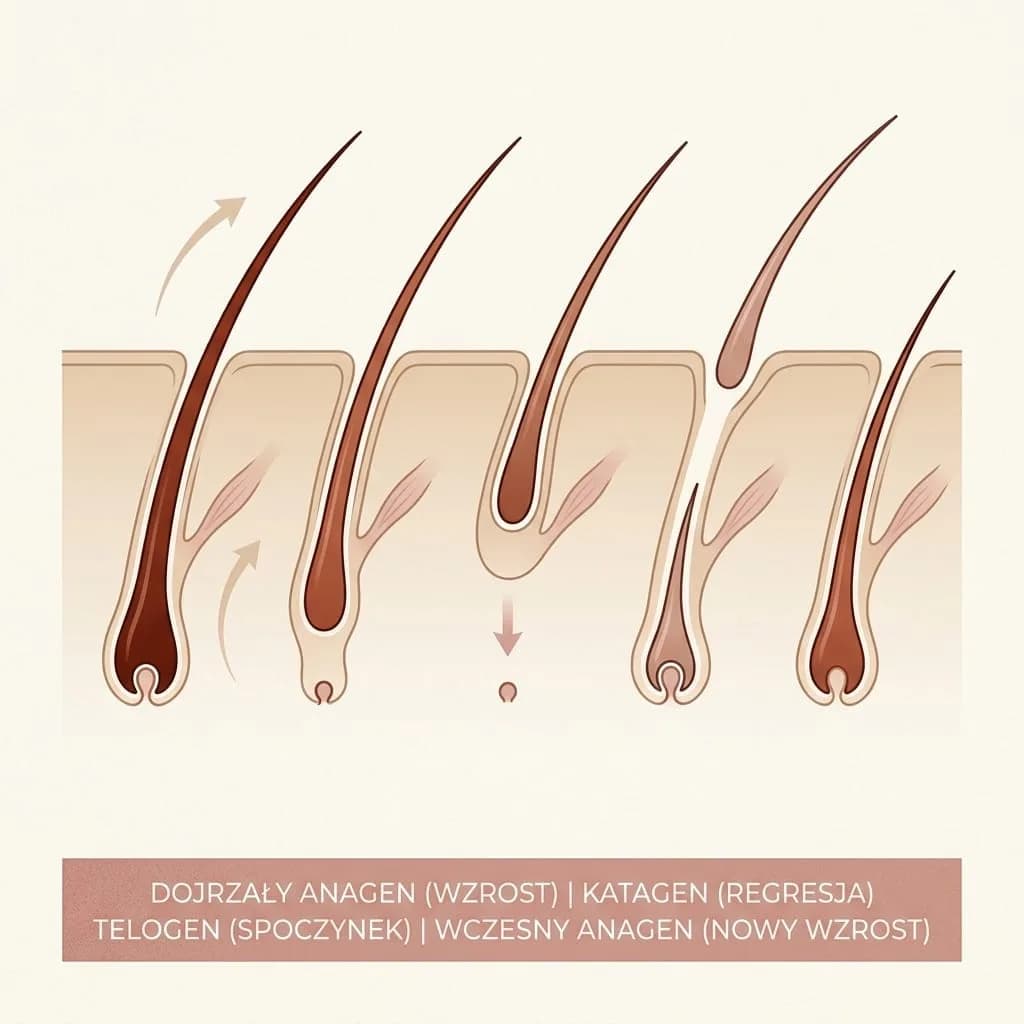
Hairs do not all grow at the same time — each follicle follows its own biological clock (learn how the hair growth cycle works). The laser beam conducts thermal energy to the root exclusively during the anagen phase, when the hair shaft is firmly anchored to the base of the follicle. To catch successive waves of awakening follicles (and understand whether hair grows back after laser hair removal), we schedule appointments strictly in line with your skin’s physiology: underarms, bikini, and face every 4–6 weeks (faster hair turnover), and legs and back every 8–10 weeks (slower hair growth cycle, meaning pleasantly spaced-out visits).
Sample schedule before summer (see our promotional packages and laser hair removal price list in Warsaw):
• October / November (1st session + free patch test 0 PLN): Around 2 weeks after the visit, the first 10% to 20% of visible hair sheds naturally.
• December / January (2nd and 3rd sessions): Remaining hair grows back noticeably slower and finer; shaving bumps and ingrown hairs subside.
• February / April (4th and 5th sessions): Only sparse, isolated hairs remain; underarms, bikini, and face are treated every 4–6 weeks, while legs and back are treated every 8–10 weeks.
• May / June (6th session – final stage): You complete your main series before peak summer sun and welcome the holidays with smooth skin.
Check treatment details for specific body areas: underarms, bikini, legs, face, men’s body areas, dark and olive skin tones (phototypes I–VI), and our transparent price list in PLN.
Which Face and Body Treatments Are Worth Doing in Winter? Warming Venus Freeze™ Thermolifting
At a glance: In winter, when freezing air outside and dry indoor heating weaken skin elasticity, non-invasive Venus Freeze™ thermolifting is an ideal complement to laser therapy. Its (MP)² technology warms deep tissue to 40–42°C, stimulating collagen production and body contouring over a series of 6–8 sessions with the soothing feel of a hot-stone massage.
During cold months, skin on the face, neck, and body often loses firmness and radiance. At Depiclinic, the second pillar of our autumn–winter care is Venus Freeze™ face and body thermolifting, which combines multi-polar radiofrequency (RF) with pulsed electromagnetic fields (PEMF). Collagen fibres act like springs in a mattress — gentle therapeutic heat of 40–42°C contracts existing fibres and stimulates fibroblasts to synthesise new collagen and elastin (see the Venus Freeze™ price list).
Why do clients love this treatment in autumn and winter?
• Feels like a warm stone massage: The procedure is relaxing and pleasantly warming when you step in from the winter cold.
• Zero downtime in freezing weather: Because the epidermis remains intact, there is no peeling or raw sensitivity to cold wind.
• Pre-holiday glow and gift idea: Visible firming of the jawline, neck, abdomen, and thighs makes it a favourite before Christmas and New Year’s Eve, while a Depiclinic gift voucher (PL) (valid for 12 months) is a thoughtful holiday gift.
What to Watch Out For Before Laser Hair Removal in Autumn and Winter: Retinol, Acids, Herbs, and Antibiotics
At a glance: Even without summer sun, winter skincare routines and home medicine cabinets often contain photosensitising ingredients. Before your appointment, discontinue retinol and exfoliating acids for 3–4 weeks, photosensitising herbs for 2–3 weeks, and wait at least 2 weeks after finishing antibiotics or using self-tanners.
In autumn and winter, we frequently reach for exfoliating serums, herbal teas, and cold remedies that make skin react to laser light like photosensitive film. Before visiting our studio at ul. Wołoska 16, review our complete preparation guide before laser hair removal so your skin is ready for a safe procedure.
Winter pre-treatment checklist:
• Retinol, AHA/BHA acids, and high-strength vitamin C (3–4 weeks break): Stop applying creams or serums with vitamin A derivatives, glycolic acid, salicylic acid, or mandelic acid on the treated area (after oral isotretinoin, wait at least 6 months).
• Photosensitising herbs and supplements (2–3 weeks break): Pause herbal teas and tablets containing St. John’s wort, calendula (marigold), field horsetail, and nettle.
• Antibiotics and cold medications (min. 2 weeks break): Wait at least 14 days after finishing antibiotics (such as tetracyclines or azithromycin) or high doses of photosensitising painkillers (ketoprofen, ibuprofen).
• Self-tanners and bronzing lotions (min. 2 weeks break): Artificial pigment in the stratum corneum absorbs the laser beam just like a natural sun tan.
Winter Aftercare Following Laser Hair Removal: Frost, Indoor Heating, Ski Trips, and SPF 50+
At a glance: For the first 72 hours after treatment, avoid saunas, swimming pools, hot baths, and intense workouts. In winter, support your skin’s hydrolipid barrier with panthenol and ceramide creams, wear soft cotton beneath wool clothing, and schedule ski trips (where snow reflects up to 80% of UV rays) at least 4 weeks after your session while applying SPF 50+.
Immediately after a laser session, mild temporary redness and perifollicular oedema (tiny goosebump-like swelling around hair follicles) may appear — a natural sign that the follicles absorbed the thermal energy. In winter, skin also copes with sharp temperature shifts between outdoor frost and dry radiator heat, making gentle hydration essential.
Four rules of winter post-laser care:
• 72 hours without overheating: For 3 days, replace hot baths with lukewarm showers and skip the sauna, pool, gym, alcohol-based toners, and scrubs.
• Rebuild the hydrolipid barrier: Twice daily, apply soothing creams rich in panthenol, allantoin, ceramides, or shea butter (such as Alantan, Bepanthen, or Cicalfate).
• Soft fabrics without friction: For 2–3 days after neck or facial laser treatments, wear a soft cotton scarf beneath wool collars; after leg or bikini sessions, choose loose, breathable trousers.
• Mandatory SPF 50+ and ski-trip timing: UVA radiation penetrates winter clouds and snow reflects up to 80% of UV rays — protect exposed areas with SPF 50+ and keep a 4-week buffer between your laser session and a ski holiday or sunny getaway (and 4 weeks without tanning before your next session).
Frequently Asked Questions (FAQ) – Autumn & Winter Treatments at Depiclinic Warsaw
1. How long after a summer holiday should I wait before my first laser hair removal session?
You should wait at least 4 weeks after your last sun exposure (4–6 weeks after an intense tan) until your skin returns to its natural baseline tone. During your free consultation and laser patch test (0 PLN) at Depiclinic, our cosmetologist will assess your skin and select safe parameters.
2. Can I go outside into freezing winter air right after facial laser hair removal?
Yes. Cold winter air does not harm skin treated with the certified LightSheer Duet (805 nm) diode laser, and cool temperatures actually help calm mild post-treatment redness. Before you leave our studio, we protect your skin with a soothing barrier cream and SPF 50+ sunscreen.
3. Can I combine a LightSheer Duet laser hair removal series with Venus Freeze™ treatments?
Yes — they make an excellent autumn and winter pairing, allowing you to reduce unwanted hair and firm your skin during the same season. Because both technologies deliver thermal energy to the tissue, we do not perform them on the exact same body area on the same day, but alternate visits in your schedule.
4. What should I do if I catch a cold and take antibiotics during my winter laser series?
Simply contact Depiclinic reception so we can reschedule your appointment to at least 14 days after your final antibiotic dose. Shifting a session by 2 weeks is completely safe and does not compromise the effectiveness of your series.
5. Does a winter ski trip or sunny holiday interrupt a laser hair removal course?
No, a winter getaway does not ruin your progress as long as you let your cosmetologist know in advance. We will plan your calendar so your session takes place at least 4 weeks before the ski slopes or tropics, and your next visit is scheduled at least 4 weeks after you return (provided the treated areas were not tanned).