Expert Knowledge•Author: Małgorzata Nowak, Cosmetologist, Co-owner of Depiclinic•Published: 17 October 2026•Updated: 23 October 2026
Does Hair Grow Back After Laser Hair Removal? Facts, Hormones, and Top-Up Sessions
Can Your Skin Create New Hair Follicles After Laser Hair Removal? The Anagen Phase and LightSheer Duet
At a glance: Human skin cannot generate new hair follicles after birth, and a follicle thermally destroyed by the LightSheer Duet diode laser during its active growth phase (anagen) never regenerates.
Let’s start by clearing up the most common myth we hear at our studio in Warsaw’s Mokotów district (ul. Wołoska 16): your skin CANNOT manufacture a single new hair follicle from scratch.
Imagine that at birth each of us receives a sealed gift basket from nature containing roughly 5 million hair follicles distributed across the entire body. Our body has no internal 3D printer capable of fabricating brand-new hair factories at age 20, 30, or 50.
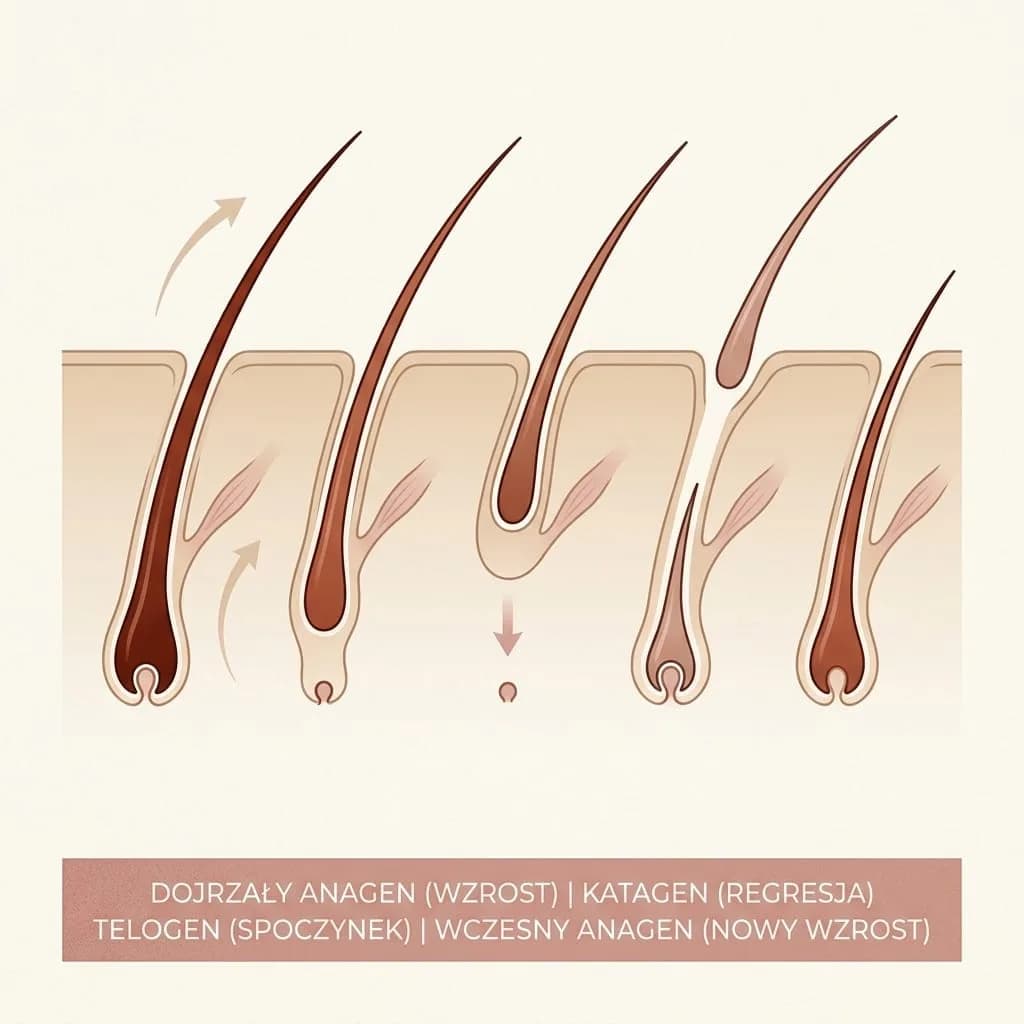
What happens during a laser hair removal session when the LightSheer Duet diode laser goes to work? Its 805 nm wavelength acts like a precision switch. It targets melanin (dark pigment) inside the root of an active hair, converts light into thermal energy, and irreversibly coagulates the hair matrix and the tiny vessels feeding the dermal papilla. This process works exclusively when the hair is in its anagen phase (active growth), because only then is the hair shaft physically connected to the base of the follicle and dermal papilla, allowing thermal energy to reach and destroy the root. A hair follicle destroyed in anagen cannot grow back.
It is also important to distinguish a medical-grade diode laser from home or salon IPL (Intense Pulsed Light) flashlamps. A standard IPL device acts like a mild sleeping pill — it merely weakens and puts the follicle to sleep for a few weeks before the hair regrows. The certified Lumenis LightSheer Duet diode laser thermally destroys active follicles in the anagen phase.
Why Do Isolated Hairs Appear After Laser Hair Removal? Dormant Follicles (Telogen)
At a glance: At any given visit, only 10% to 20% of visible hair is in the active growth phase (anagen), while the remaining follicles rest in the dormant phase (telogen) and awaken gradually over subsequent months or years.
If a destroyed follicle never regenerates, why does an isolated hair sometimes appear on smooth skin several months or years later? The answer is your skin’s reserve of dormant follicles.
Your body is a resilient ecosystem that behaves very much like a meadow full of seeds. When you attend a laser session, we can only target the plants that have already sprouted above ground — hairs currently in the anagen (active growth) phase. In most body areas, that represents 10% to 20% of visible hair at any single moment.
The remaining follicles are either sleeping underground in the resting phase (telogen) or producing vellus hair — fine, translucent peach fuzz that contains virtually no dark melanin pigment. Because the laser beam requires melanin to generate heat, vellus hair remains untouched.
This biology also explains a frequent question from clients: why does it sometimes look like more hair appears after the 2nd or 3rd session? Those are not hairs regrowing from destroyed follicles! It is the “second shift” — previously dormant follicles synchronising their cycle and entering the anagen phase together, which allows the laser to eliminate a large wave of them at your very next appointment.
So when you spot an unexpected single hair a year or two after completing your series, it is not an old hair coming back to life. It is a newly awakened sleeper follicle that stayed in deep hibernation throughout your original course and has only just decided to sprout.
What Wakes Dormant Follicles? Hormones and Medications vs. the Popular Myth About Biotin and B Vitamins
At a glance: Clinical reviews (including *Patel et al., 2017*; *Almohanna et al., 2019*) show that dormant follicles are awakened — and fine peach fuzz is converted into dark terminal hair — by hormones (androgens, PCOS, thyroid disorders) and certain medications (e.g. minoxidil), whereas the popular belief that B vitamins and biotin cause body hair to regrow after laser treatment is a myth.
Dormant hair follicles do not wake up without a trigger. They require a distinct biological signal to shift a resting follicle into growth or transform fine, unpigmented peach fuzz (*vellus*) into thicker, pigmented terminal hair. Here is what peer-reviewed medical research shows:
1. Hormonal fluctuations (thyroid, Hashimoto’s, pregnancy, and PCOS – hormone-dependent areas)
A woman’s endocrine system undergoes natural shifts throughout life. Pregnancy, breastfeeding, stopping hormonal contraception, thyroid fluctuations (such as hypothyroidism or Hashimoto’s thyroiditis), polycystic ovary syndrome (PCOS), insulin resistance, and perimenopause are major hormonal milestones. Endocrine studies (*Randall, 2008*; *Martin et al., 2018*) demonstrate that shifts in hormone ratios — especially elevated androgens — act like a megaphone waking dormant follicular reserves.
This is particularly noticeable in hormone-dependent body areas (such as the chin, upper lip, jawline, areolae, linea alba, and bikini area), where follicles have a high density of androgen receptors. While results on less hormone-sensitive areas (like lower legs or underarms) remain remarkably stable, in clients with PCOS or hirsutism androgens can continuously stimulate vellus hairs to darken. LightSheer Duet laser therapy provides tremendous relief and long-term reduction here, paired with occasional maintenance sessions.
2. Scientific facts about B vitamins and biotin (separating science from salon myths)
In many beauty salons, clients are told that taking biotin (vitamin B7) or B-complex vitamins (B2, B5, B6, B9, B12) “feeds” dormant follicles and causes body hair to grow back after laser hair removal. What does peer-reviewed dermatology literature say?
Systematic reviews indexed in PubMed (*Patel et al., 2017, Skin Appendage Disorders*; *Almohanna et al., 2019, Dermatology and Therapy*; *Guo & Katta, 2017*) are clear: B vitamins work strictly like fuel in a car’s tank. If you have a clinical deficiency, scalp hair may thin, and supplementation restores normal function. However, in a healthy person with a full “tank”, excess water-soluble B vitamins and biotin are simply excreted — they do not create new follicles, do not turn peach fuzz into dark body hair, and do not cause hair regrowth after laser treatment.
Why, then, do we ask about “hair supplements and scalp lotions” before your laser appointment at Depiclinic? For three specific safety reasons:
• Hair-growth medications (e.g. minoxidil): Unlike vitamins, active pharmaceutical agents such as minoxidil, corticosteroids, or certain prescription drugs (*Saleh et al., 2023*) can genuinely stimulate dormant follicles across the body.
• Photosensitising herbs hidden in “hair & nails” tablets: Multi-ingredient hair supplements frequently contain herbal extracts (field horsetail, nettle, calendula, St. John’s wort). We pause them 2–3 weeks before treatment not because they “weaken the laser or grow hair”, but because they are photosensitising and could trigger skin irritation or burns when exposed to laser light (*Cotterill, 2001*; *Kerstein et al., 2014*). See the full checklist in our preparation guide.
• Biotin distorts thyroid blood tests (FDA Warning): High-dose biotin (5,000–10,000 mcg) interferes with laboratory immunoassays and can produce falsely abnormal TSH, fT3, and fT4 thyroid results (*Bowen et al., 2019*). Always pause biotin for at least 48–72 hours before a blood test.
Men’s Laser Hair Removal and Testosterone – Why Do Men Need More Patience?
At a glance: High levels of testosterone and DHT in men aged 20 to 45 continuously activate dormant hair follicles in male hormone-dependent zones, which is why men benefit from regular maintenance sessions after completing their primary series.
Men’s laser hair removal follows its own physiological rules, conducted by the primary male hormone — testosterone and its potent metabolite, DHT (dihydrotestosterone).
For male body hair, testosterone acts like a built-in turbocharger. Between the ages of 20 and 45, circulating androgens steadily recruit dormant follicles across typical male areas (such as the back, nape, shoulders, and chest). It is completely natural for a man to have a relatively smooth back at age 25, only for previously dormant follicles to awaken at age 30 or 35 and produce denser hair.
Does that mean laser hair removal is pointless for men? Quite the opposite! LightSheer Duet laser therapy (using the large vacuum-assisted High Speed handpiece) is an effective solution for painful ingrown hairs, folliculitis, collar irritation on the neck, and excess sweating during sports or summer heat. Men simply need to keep in mind that their natural “hormonal engine” runs continuously, so maintaining smooth skin over the years involves occasional top-up visits.
Read more about body areas, session durations, and pricing on our page dedicated to laser hair removal for men.
How Often Should You Book a Top-Up Session After Laser Hair Removal? 20 Minutes Once a Year
At a glance: After completing your full course of 6–8 laser hair removal sessions, you never have to repeat the entire series from the beginning — 1 brief top-up session every 12–24 months is enough to eliminate isolated newly awakened hairs.
Here is the most reassuring takeaway: to enjoy smooth skin for years to come, you NEVER need to start a full treatment series all over again!
Your foundational course of 6–8 appointments (scheduled every 4–6 weeks for underarms, bikini, and face and every 8–10 weeks for legs and back) is like a major home renovation — it achieves long-term hair reduction after a series of 6–8 sessions (individual results vary) and transforms your daily comfort. You can forget about razor burn, nicks, and last-minute shaving before the pool or holidays.
To preserve that result long-term, all you need is a top-up (maintenance) session. It is just a single, 15–20 minute visit once a year or once every two years — much like an annual dental check-up or car service. You visit Depiclinic in Warsaw’s Mokotów district, and our cosmetologist targets the few newly awakened anagen hairs before they ever become a nuisance.
Want to check the price of a single maintenance visit or a package? See our current laser hair removal price list in Warsaw or treat someone close to you with a Depiclinic gift voucher (PL).
Frequently Asked Questions (FAQ) – Hair Regrowth After Laser Hair Removal in Warsaw
1. Can a hair follicle destroyed during laser hair removal in the anagen phase grow back?
No. A hair in its active growth phase (anagen) whose matrix and dermal papilla have been thermally destroyed by the LightSheer Duet diode laser never regenerates and does not grow back.
2. Why can’t all hairs be removed in a single laser session?
Because the laser thermally destroys only hairs currently in the anagen phase, which accounts for 10% to 20% of visible hair in a given area at any one time. The remaining 80–90% of follicles are in transitional or resting phases (telogen), which is why a complete course typically consists of 6–8 sessions.
3. Do biotin and B vitamins cause hair to grow back after laser hair removal?
No — clinical reviews (including *Patel et al., 2017*; *Almohanna et al., 2019*) confirm that in healthy individuals, biotin and B vitamins neither stimulate new body hair growth nor wake dormant follicles. However, multi-ingredient hair supplements containing photosensitising herbs (such as horsetail, St. John’s wort, or calendula) must be paused 2–3 weeks before your laser session for skin safety.
4. Is laser hair removal effective if I have PCOS, hypothyroidism, or Hashimoto’s?
Yes. LightSheer Duet diode laser therapy is a highly effective method for reducing unwanted hair in hormone-dependent areas for clients with PCOS or thyroid conditions. Because ongoing hormonal stimulation can gradually wake dormant follicles, we recommend a maintenance top-up session once or twice a year after completing your initial series.
5. Where in Warsaw can I book LightSheer Duet laser hair removal and a free patch test in English?
Visit Depiclinic in Warsaw’s Mokotów district (ul. Wołoska 16, Mokotów BOX building, 1st floor). Since 2011 we have specialised exclusively in Lumenis LightSheer Duet diode laser hair removal for all skin tones (phototypes I–VI), and every course begins with a free cosmetology consultation and laser patch test (0 PLN) with our English-speaking team.